
Stories ·
Allow yourself to feel: residents on ZuAfrique 2.0
Five residents on what 21 days in Kilifi changed, in their own words.
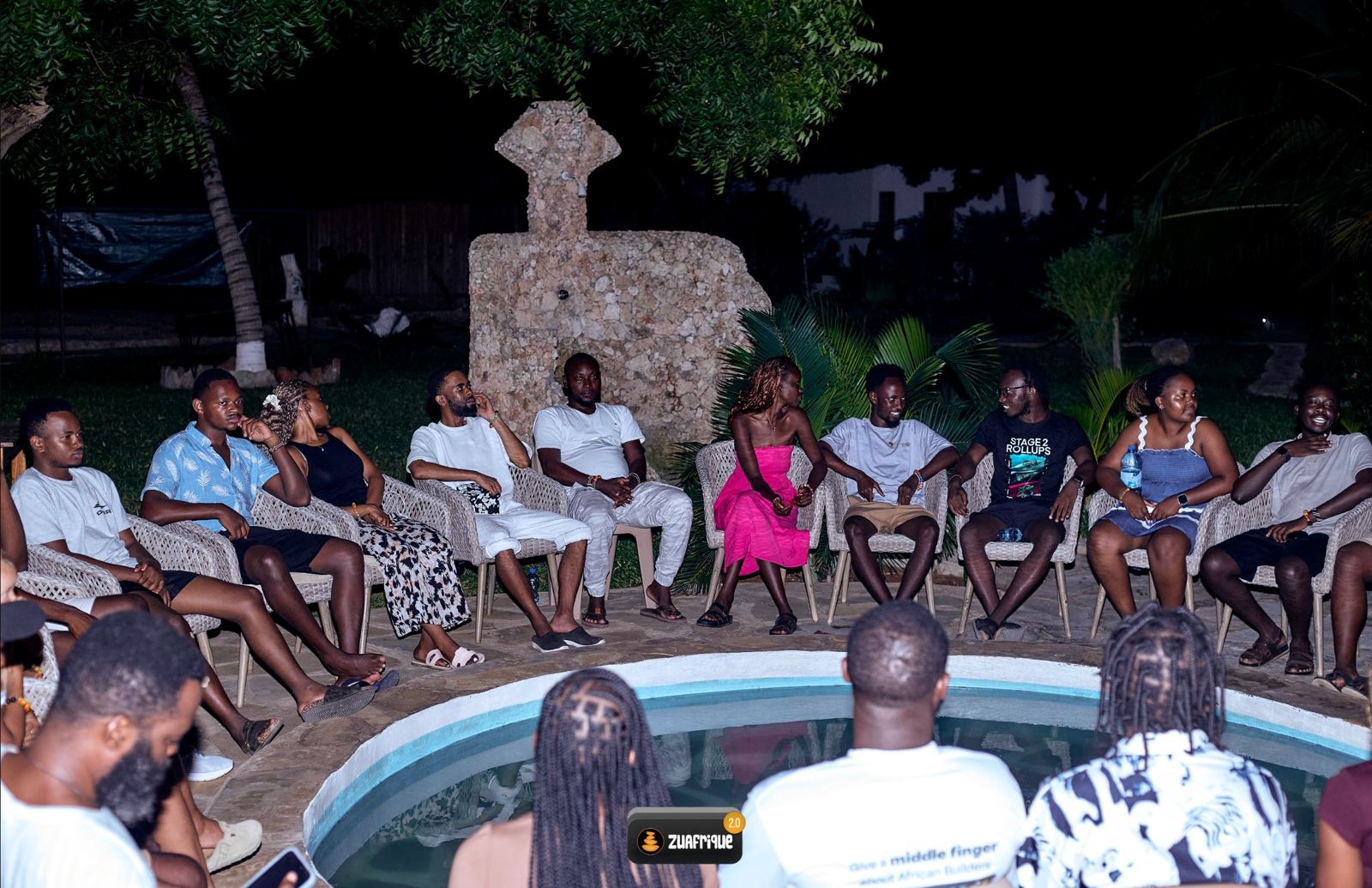
After ZuAfrique 2.0, many residents wrote about the experience on LinkedIn, X and their own blogs. These excerpts were published in the 2026 General Report.
Peter Maina, agritech founder and economist
“For years, I had moved through the world wearing thick armour. Building a business in Africa is hard. Being told to simply stop and feel is a radical thing. You don’t usually get the quiet, safe space you need to actually take stock of your own humanity.”
Peter arrived as a numbers person, an economist who had spent a decade optimising agricultural systems across East Africa. He went on to curate a men’s circle where African men talked honestly about vulnerability and leadership. He calls what happened in Kilifi germination.
Meave Akinyi, ecosystem builder and storyteller
“They called it a pop-up city. But ZuAfrique is a crucible, and a crucible’s job is not to contain; it is to transform.”
On the theme, she writes: “Allow yourself to feel is not particularly an invitation to be emotional but more so an invitation to be original, to come back to self.”
Malwina Grochowska, storyteller and creator of Osnova
“That stay taught me so many lessons: on how to share and let go of the culturally programmed need to succeed as an individual, on how not to be extractive, and on how we can flip the script and think differently about Africa, about the future of people, and about tech serving humanity, not the other way around.”
Francesca, AI sessions lead
Francesca ran near-daily learning sessions on AI throughout the residency. Filling in the impact survey at the end, she reflected:
“Maybe we’ve been optimising for the wrong conditions. Maybe the environments that unlock the highest intelligence aren’t built on pressure, but on safety, trust, and play.”
Michael Lawal, VP of Partnerships, AyaHQ
Michael first presented the human-layer framework at ZuAfrique 1.0.
“ZuAfrique 2.0 felt less like an event and more like a living question about humanity and Africa’s future. In the end, when technology reaches its peak, human connection becomes the key differentiator between humans and machines.”
“If last year established ZuAfrique as an interesting experiment, this year made it feel more like an emerging movement.”